
How to Get the Texas Commercial Vehicle Crash Report (CR-3) in Bexar County
Quick Answer Key Takeaways The CR-3 Today: One Report Covers the Commercial Vehicle Data After a crash involving a commercial truck, delivery vehicle, or other commercial motor vehicle (CMV) on Bexar County roads, the responding officer completes a Texas Peace Officer’s Crash Report, Form CR-3. That is the crash report in Texas. There is no […]
Texas 18-Wheeler Crash Report: What to Capture From the CR-3 After a Truck Accident
Reviewed by Ryan Orsatti, Texas personal injury attorney. Quick Answer Key Takeaways Why the CR-3 Is Different in an 18-Wheeler Case The Texas Peace Officer’s Crash Report (Form CR-3) documents every reportable crash on a Texas roadway. When a commercial motor vehicle (CMV) is involved, the form expands to include fields that do not appear […]
What Should I Say If the Oilfield Company Safety Coordinator Wants a Written Statement Right Now?

Quick Answer Tell the safety coordinator that you will report the incident accurately, but you need medical care and time to avoid guessing or leaving out important facts. Provide basic information about when, where, and how you were injured, but do not speculate about fault, sign an incomplete statement, or say you are uninjured before […]
What If the At-Fault Driver Doesn’t Have Enough Insurance to Cover My Injuries in Texas?

Quick Answer If the at-fault driver does not have enough insurance to cover your injuries, that driver’s liability limit is not necessarily the end of your claim. You may be able to use underinsured motorist coverage, PIP, MedPay, health insurance, additional liability policies, or claims against other responsible parties. The driver may also remain personally […]
Can My Spouse Refuse to Let a Company Representative Question Me in the Hospital After a Texas Oilfield Accident?
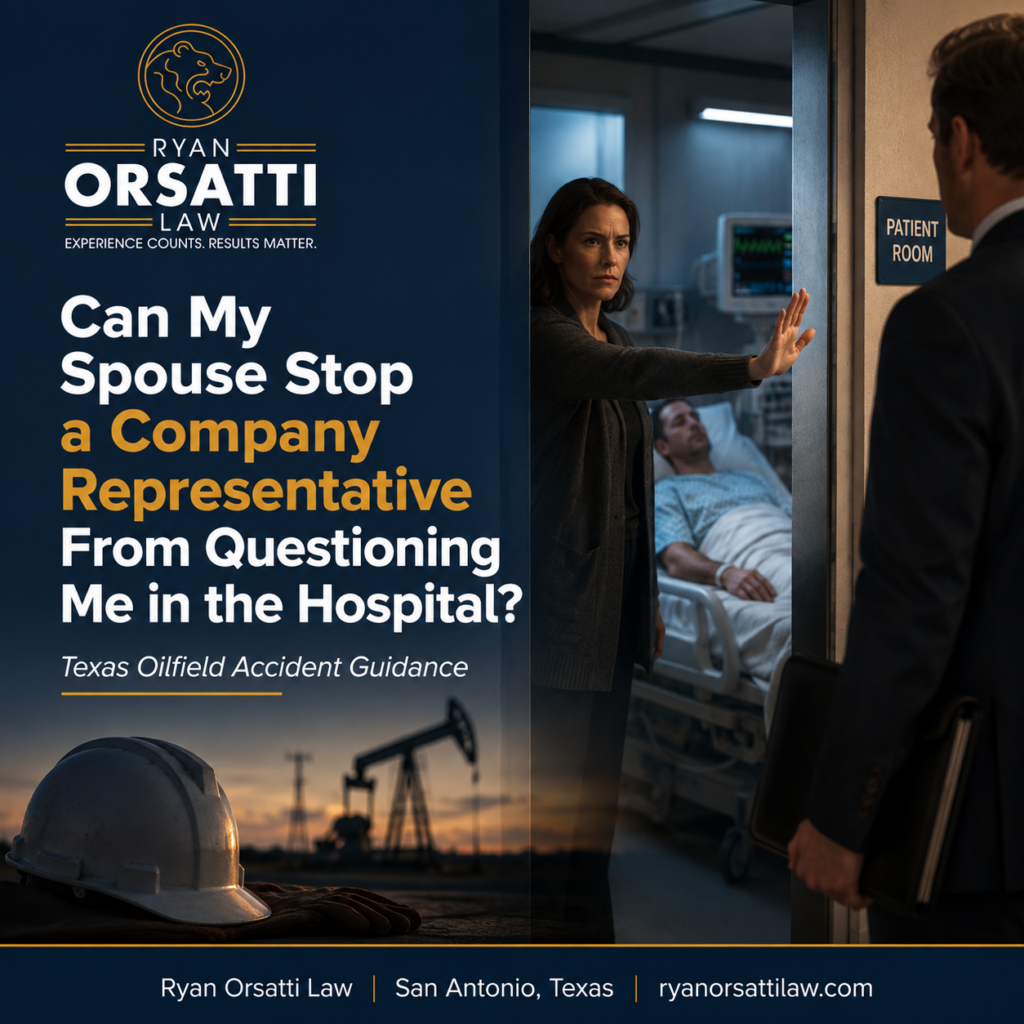
Quick Answer Yes, in practical terms. A hospital patient in Texas decides who may visit and can withdraw that consent at any time under 42 C.F.R. § 482.13(h)(2), and your spouse can relay that decision to the charge nurse and ask that the company representative be kept out of the room. No Texas law requires an […]
Can the Oilfield Company Make Me Sign an Incident Report While I Am in the ICU or ER?

Quick Answer An oilfield company may ask you to complete an incident report, but Texas law generally does not require you to sign the company’s private form while you are hospitalized, sedated, medicated, confused, or medically unstable. Report the injury in writing, request a copy of every document, and defer any detailed statement until you […]
How Fast Must I Send a Litigation-Hold Letter After a Texas Truck Crash, and Who Gets It?

Quick Answer Send a truck-crash preservation letter as soon as the responsible companies and evidence custodians can be identified, preferably the same day counsel is retained and within the first 24 to 48 hours when possible. Texas law does not impose a universal 24-hour, 48-hour, or 72-hour deadline. Separate notices should reach the motor carrier, […]
Low-Ball Settlement Offer? Here’s How a Texas Personal Injury Lawyer Negotiates a Better Settlement

Quick Answer A low-ball settlement offer does not have to be accepted. A Texas personal injury lawyer negotiates by identifying why the insurer discounted the claim, correcting those weaknesses with reliable evidence, and presenting a counter-demand tied to fault, medical proof, wage loss, future care, coverage, and litigation risk. Do not sign a release before […]
Can the Insurance Company See My Medical Records Without Permission in Texas?
Quick Answer Usually, the at-fault driver’s insurance company cannot obtain your medical records directly from a doctor merely by asking. It normally needs a valid written authorization, records you voluntarily provide, or lawful court process. Different rules may apply to your health insurer, workers’ compensation carrier, or records requested after a Texas personal injury lawsuit […]
Should I Talk to the Company Man, Safety Man, HR, or Insurance Adjuster While I Am Medicated?
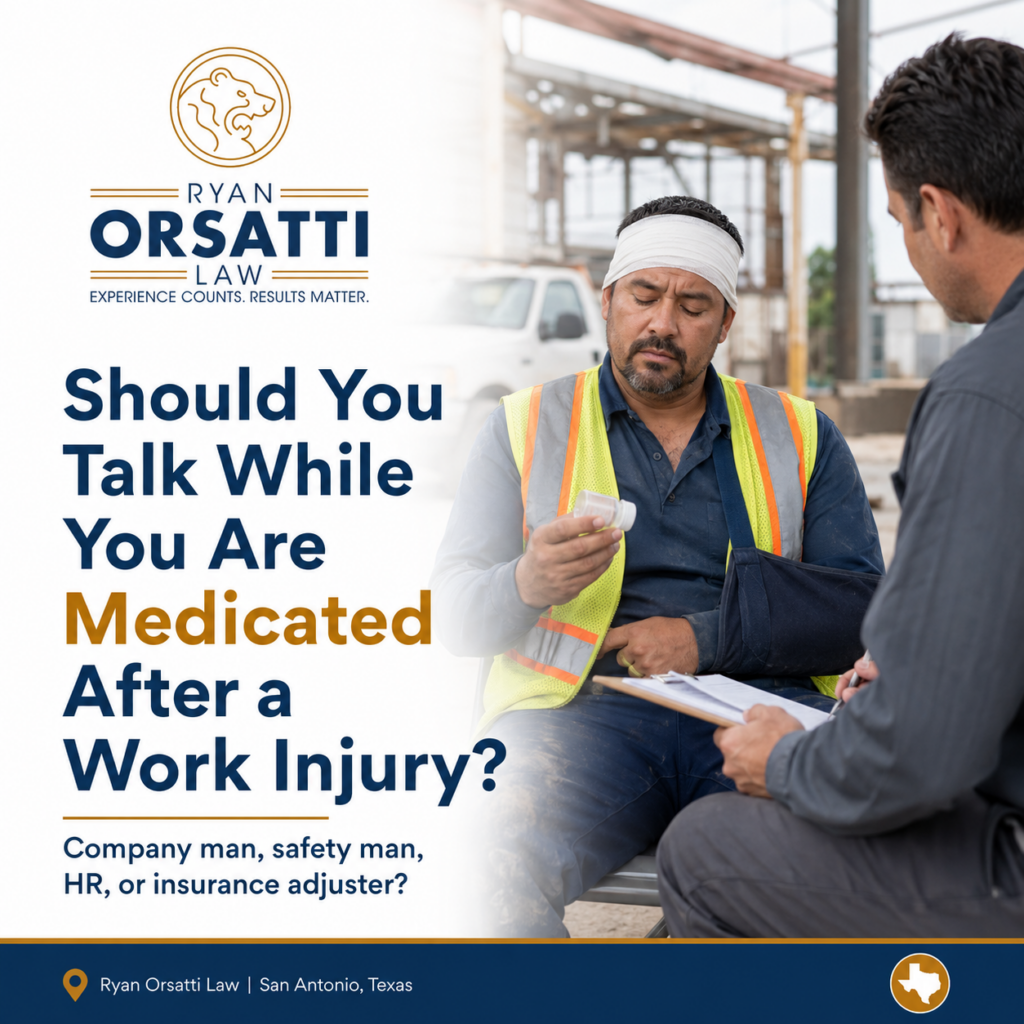
Quick Answer Generally, you should not give a detailed, recorded, or signed statement while pain medication, sedation, a head injury, severe pain, or shock may be affecting your memory or alertness. Report the injury, identify urgent safety hazards, and provide the basic facts needed for medical care, but ask to postpone the detailed interview until […]