
A lot of people in San Antonio walk away from a crash thinking they are “just sore” or “probably fine,” only to feel worse later that day, the next morning, or several days later. That is common with injuries like whiplash, concussions, soft-tissue injuries, back injuries, and some nerve-related symptoms. The fact that symptoms were delayed does notautomatically mean you were not hurt. CDC guidance notes that concussion symptoms may not show up right away and can take hours or days to appear, and MedlinePlus notes that whiplash pain can also be delayed. (CDC)
Just as important, waiting too long to get checked can create two separate problems. First, it can make treatment and recovery harder. Second, it can make an insurance claim more difficult because adjusters often look closely at treatment gaps, inconsistent complaints, and whether the medical records connect the crash to the injury. Texas law also imposes deadlines on injury claims, and Texas follows proportionate responsibility rules that can affect recovery if fault is disputed. (Texas Statutes)
Quick Answer
Yes—you should usually see a doctor as soon as possible after a car accident, even if your symptoms seem minor at first.
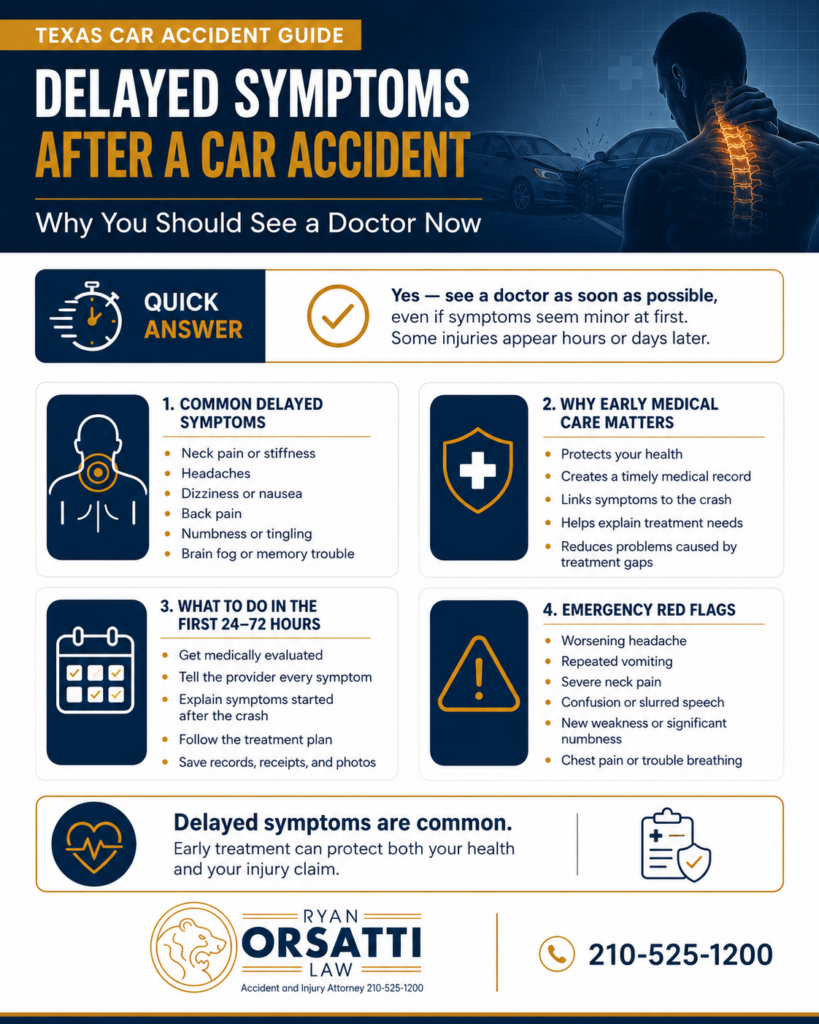
Delayed symptoms are common after crashes. Neck pain, headaches, dizziness, numbness, back pain, shoulder pain, and concussion-related symptoms may not fully develop until hours or days later. (CDC)
Early medical care matters for two reasons. It helps protect your health, and it creates a timely record showing when symptoms started, what body parts were affected, and what treatment was recommended. That documentation can matter a great deal when the insurance company evaluates causation, severity, and whether your care was reasonable and necessary. TDI also advises claimants to have doctors provide treatment details, medical condition information, and prognosis to the insurer. (Texas Department of Insurance)
Why symptoms can show up later
After a wreck, adrenaline, shock, and the body’s stress response can mask pain. Some injuries also worsen as inflammation increases or as you resume normal activity.
Common examples of delayed symptoms include:
- Neck stiffness or reduced range of motion
- Headaches
- Dizziness
- Shoulder pain
- Low-back pain
- Tingling or numbness in the arms or hands
- Difficulty concentrating
- Light sensitivity
- Sleep problems
- Nausea
- “Foggy” thinking or memory issues
Concussion symptoms may affect how you feel, think, act, or sleep, and CDC says some may appear hours or days later. (CDC)
Common delayed symptoms after a Texas car accident
| Symptom | What it may suggest | Why prompt medical care matters |
|---|---|---|
| Neck pain or stiffness | Whiplash or soft-tissue injury | Early evaluation documents range-of-motion limits, tenderness, and need for follow-up care |
| Headache | Concussion, neck injury, or muscle strain | A doctor can screen for warning signs and decide whether imaging or monitoring is needed |
| Back pain | Strain, disc injury, or aggravated preexisting condition | Records help show whether the crash caused a new injury or worsened an old one |
| Numbness or tingling | Nerve irritation or possible radicular symptoms | Neurologic complaints should be documented early and monitored |
| Dizziness or nausea | Concussion, vestibular issues, or head/neck injury | These symptoms can affect driving, work, and daily function |
| Brain fog, memory trouble, sleep changes | Mild traumatic brain injury/concussion | Symptom timing and progression often matter in both treatment and claims evaluation |
Why seeing a doctor quickly can help your injury claim
Insurance companies do not decide claims based only on what happened in the crash. They also look at what happened after the crash.
That usually includes:
- When you first reported symptoms
- How long you waited to get evaluated
- Whether your symptoms were consistent over time
- Whether your records mention the crash as the cause
- Whether the treatment seems proportional to the complaints
- Whether there are prior injuries or degenerative findings
- Whether there were long gaps in treatment
If you wait days or weeks to seek care, the adjuster may argue:
- You were not seriously hurt
- Something else caused the symptoms
- The injury was minor and resolved quickly
- The treatment was unrelated or excessive
- Your pain came from a preexisting condition rather than the wreck
That does not mean a delayed-care claim is unwinnable. It does mean the records, the timeline, and the explanation for the delay become more important.
What to do in the first 24 to 72 hours
If you have not seen a doctor yet, take these steps now:
- Get medically evaluated. Urgent care, your primary doctor, or an ER may be appropriate depending on your symptoms.
- Tell the provider every symptom. Do not minimize it. Mention headaches, dizziness, neck pain, back pain, numbness, trouble sleeping, anxiety, or concentration problems.
- Explain that the symptoms started after the crash. Be accurate about timing.
- Follow the treatment plan. Fill prescriptions, attend follow-ups, and follow referral instructions.
- Photograph visible injuries. Bruising sometimes becomes more obvious later.
- Write down a symptom timeline. Note what started immediately, what appeared later, and what is getting worse.
- Keep all records and receipts. Save discharge papers, visit summaries, imaging reports, prescriptions, mileage logs, and work-loss information.
- Report the crash to your insurer if you have not done so.
- Be careful with recorded statements. Do not guess or downplay injuries.
- Avoid saying “I’m fine” if you are not. Casual comments can be repeated later.
Red-flag symptoms that may need immediate emergency care
Seek immediate medical attention if you have symptoms such as:
- Loss of consciousness
- Worsening headache
- Repeated vomiting
- Confusion that is getting worse
- Seizures
- One-sided weakness
- Slurred speech
- Severe neck pain after impact
- New numbness or significant weakness
- Chest pain or trouble breathing
CDC advises getting immediate emergency medical care for concussion danger signs. (CDC)
Can I still have a case if I did not go to the doctor right away?
Possibly, yes.
Many legitimate injury claims involve delayed symptoms or a short delay before treatment. The key issue is usually not whether you were treated on the same day, but whether the overall evidence makes sense:
- Did the symptoms begin within a believable time after the wreck?
- Did you report them consistently?
- Did you eventually seek appropriate care?
- Do the records tie the condition to the crash?
- Is there an obvious reason for delay, such as thinking the soreness would pass?
The longer the gap, the more the insurance company tends to focus on causation. That is one reason it is usually better to get checked sooner rather than later.
How Texas law can affect a delayed-symptom claim
Texas personal injury claims generally have a two-year limitations period under Civil Practice and Remedies Code section 16.003, though exceptions and case-specific issues can affect deadlines. Texas also uses proportionate responsibility rules, and a claimant generally cannot recover if their percentage of responsibility is greater than 50 percent. (Texas Statutes)
In plain English, that means two things:
- You should not assume you have unlimited time to deal with the legal side.
- If the other driver or insurer argues you were partly at fault, liability disputes can directly affect the value and viability of the claim.
Delayed medical care does not automatically defeat a claim, but it can become one more issue the insurer uses when arguing about damages and causation.
What insurance may pay for early treatment in Texas?
Depending on the policies involved, several coverages may come into play:
- Personal Injury Protection (PIP): Can pay certain medical expenses and lost income benefits after a motor vehicle accident.
- Medical Payments Coverage (MedPay): Can pay limited medical expenses.
- Liability coverage: The at-fault driver’s bodily injury liability coverage may ultimately be responsible for damages if fault is established.
- Uninsured/Underinsured Motorist coverage: May apply if the at-fault driver has no insurance or not enough insurance.
Texas Department of Insurance consumer materials explain that PIP and MedPay both pay limited medical and funeral expenses, and that PIP also pays lost-income benefits. (Texas Department of Insurance)
Because the source of payment can affect billing strategy, documentation, and claim handling, it is smart to identify available coverage early.
What representation usually looks like in this kind of case
If delayed symptoms turn into a bigger problem, legal representation often involves:
1. Building a clean timeline
A lawyer will usually organize:
- Crash date
- Symptom onset
- First treatment date
- Follow-up care
- Imaging
- Work restrictions
- Wage loss
- Ongoing limitations
2. Collecting the right records
That may include:
- EMS or ER records
- Urgent care and primary care records
- Orthopedic or neurology records
- Physical therapy records
- Imaging reports
- Pharmacy records
- Wage-loss documents
3. Addressing “gap in treatment” arguments
Sometimes the issue is not just the gap itself, but whether there is a documented reason for it.
4. Evaluating liability and coverage
A case can involve both fault disputes and medical disputes at the same time.
5. Presenting damages clearly
That includes medical expenses, lost income, pain, physical limitations, and the effect on daily life.
Common mistakes to avoid
People often hurt their own claims without realizing it. Common mistakes include:
- Waiting too long to get checked
- Telling the doctor only about the “worst” symptom and leaving out others
- Missing follow-up visits
- Stopping treatment without explanation
- Posting on social media as if nothing happened
- Giving a recorded statement that minimizes symptoms
- Throwing away receipts, discharge papers, or work-loss proof
- Assuming minor vehicle damage means minor injury
Attorney Insight
One of the most common insurance defenses in delayed-symptom cases is not “you were never hurt,” but “we cannot tell what caused this because you waited too long, had prior issues, or did not complain consistently.”
That is why the first accurate medical history after the wreck matters so much. If your neck pain started the next morning, say that. If the headache began two days later, say that. If your back had been fine for years and flared after the collision, make sure the record reflects that history clearly and honestly.
A good claim is usually built on consistent facts, timely documentation, and treatment that matches the symptoms—not exaggeration.
Frequently Asked Questions
Is it normal to feel fine right after a car accident and worse the next day?
Yes. Delayed pain and delayed concussion-type symptoms can happen after a crash. That is one reason prompt medical evaluation is often a good idea. (CDC)
How long after a car accident can symptoms appear?
Some symptoms show up immediately, while others may appear hours or days later. Headache, neck pain, dizziness, and cognitive symptoms are common examples. (CDC)
Will the insurance company use delayed treatment against me?
Often, yes. A treatment gap can become an argument about causation or severity. It does not automatically defeat a claim, but it can make documentation more important.
Should I go to urgent care or the ER?
That depends on the symptoms. Red-flag symptoms such as worsening headache, repeated vomiting, confusion, weakness, or severe pain may require emergency care. Less urgent symptoms may be appropriate for urgent care or your regular doctor. (CDC)
What if I already said I was “okay” at the scene?
That does not end your claim. Many people do not realize they are hurt yet. What matters now is getting evaluated and making sure your symptoms are documented accurately.
How long do I have to file a car-accident injury lawsuit in Texas?
Generally, Texas personal injury claims are subject to a two-year limitations period, but exceptions and case-specific issues can apply. Do not rely on a general rule for your exact deadline. (Texas Statutes)
What to do next if you are having delayed symptoms
Use this simple checklist:
- Get medical care now
- Report every symptom accurately
- Follow up as instructed
- Save records, bills, and receipts
- Track missed work and physical limitations
- Avoid casual statements that minimize your injuries
- Ask questions early if the insurer starts disputing treatment or causation
Contact
Ryan Orsatti Law
4634 De Zavala Rd, San Antonio, TX 78249
Phone: 210-525-1200
This blog is for informational purposes only, not legal advice. Reading it does not create an attorney-client relationship. Past results do not guarantee future results.
Hurt in an accident in San Antonio? Learn how a San Antonio car accident lawyer can help with your claim. Call 210-525-1200 or request a free consultation.
The firm works on a contingency fee. You pay nothing unless the firm recovers money for you, and that covers case expenses as well as the fee: if there is no recovery, you owe no attorney's fee and no case expenses. Ask for the fee agreement and read the fee and expense section before you sign anything.
Related San Antonio legal resources
Primary legal and public-data sources
- TxDOT: Texas crash reports, data, and statistics
- Texas Civil Practice and Remedies Code Chapter 33: proportionate responsibility
Ryan Orsatti Law
4634 De Zavala Road, San Antonio, TX 78249
General reference links. Consult each source for its current text.