
Texas roads see thousands of bicycle accidents annually, many following predictable patterns caused by driver inattention, failure to yield, unsafe turning, and disregard for cyclists’ right to the road. Among the most common types of bicycle accidents in Texas are right-hook collisions, left-cross crashes, dooring incidents, rear-end collisions, and sideswipe crashes.
Attorney Ryan Orsatti works directly with injured cyclists across San Antonio, Austin, Dallas, and Houston to investigate these crashes, identify liable parties, and fight for fair compensation when driver negligence causes serious injuries.
Key Takeaways for Common Bicycle Accident Types in Texas
- Right-hook and left-cross collisions at intersections cause many serious bicycle injuries when drivers turn across cyclists’ paths without yielding
- Dooring accidents occur when parked vehicle occupants open doors into bike lanes without checking for approaching cyclists, particularly in urban areas like downtown Austin and Dallas
- Rear-end and sideswipe crashes result from distracted driving, unsafe passing, speeding, or drivers failing to share the lane properly
- Hit-and-run bicycle accidents are prosecuted criminally, but injured cyclists may still pursue civil claims if the driver is identified or through uninsured motorist coverage
- Road defects including potholes, cracked pavement, drainage grates, and construction hazards may create liability for municipalities or contractors when they cause bicycle crashes
Right-Hook Bicycle Accidents
Right-hook collisions occur when a vehicle traveling in the same direction as a cyclist turns right across the cyclist’s path, striking the bicycle. These crashes happen most frequently at intersections but also occur at driveways, parking lot entrances, and anywhere vehicles make right turns.
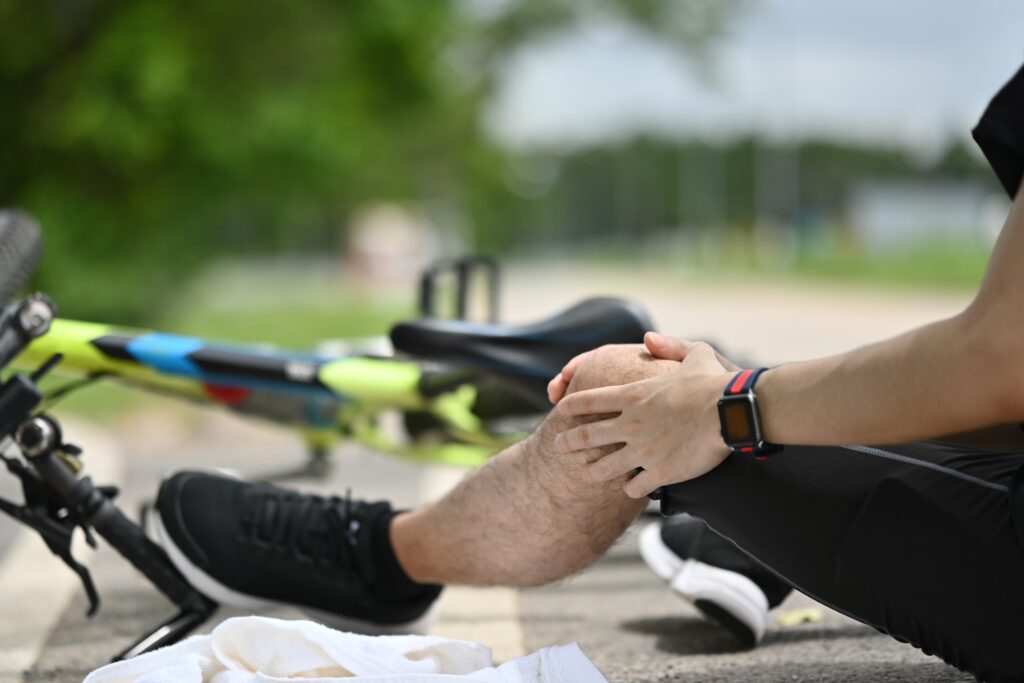
Right-hook accidents stem from several driver failures:
- Inattention blindness, where drivers look for cars but fail to register smaller vehicles like bicycles
- Misjudging speed and distance, assuming they have time to complete the turn before the cyclist arrives
- Distracted driving from checking phones or adjusting controls
- Aggressive driving where drivers who just passed the cyclist deliberately cut in front, underestimating how quickly they’ll cross the cyclist’s path
Texas law requires drivers to yield to cyclists proceeding straight when making turns. Drivers must check mirrors, signal turns, and confirm the path is clear before turning across bike lanes. When drivers violate these duties and strike cyclists, they bear liability for resulting injuries.
Left-Cross Bicycle Accidents
Left-cross collisions occur when a vehicle turning left across traffic strikes a cyclist traveling straight in the opposite direction or when a vehicle pulls out from a side street or driveway into a cyclist’s path. These crashes might cause catastrophic injuries because impact speeds are higher than those of right-hook collisions.
Left-cross collisions happen in several common scenarios:
- A cyclist rides through an intersection with the right of way while an oncoming vehicle turns left without yielding, and the vehicle’s front strikes the bicycle broadside
- A vehicle waiting at a side street or parking lot entrance pulls out into the main road without seeing an approaching cyclist
- The cyclist strikes the vehicle’s side or gets struck by the vehicle’s front as the driver fails to check both directions
Left-cross crashes result from similar driver errors as right-hooks. Visibility issues, like dawn/dusk or bad weather, can also contribute to left-cross crashes. However, reduced visibility doesn’t excuse drivers from yielding the right of way. Drivers must slow down and exercise greater caution when visibility is limited.
Dooring Bicycle Accidents
Dooring occurs when a parked vehicle’s occupant opens a door into the path of an approaching cyclist. The cyclist strikes the open door, gets thrown over it, or swerves into traffic to avoid it, and gets hit by a passing vehicle. Dooring accidents can cause head injuries, facial trauma, shoulder and collarbone fractures, and serious road rash.
Texas Transportation Code prohibits opening vehicle doors into traffic unless it’s reasonably safe to do so. Vehicle occupants must check for approaching bicycles and pedestrians before opening doors. When they fail to check and cause a collision, they bear liability. Drivers, passengers, and even rideshare customers may be held responsible depending on who opened the door.
Proving dooring cases requires documenting the bicycle’s position, the door’s position, witness testimony about who opened the door, and evidence that the cyclist was traveling lawfully in or near the bike lane. Damage to the bicycle and the vehicle door helps establish impact dynamics.
Rear-End Bicycle Collisions
Rear-end crashes occur when vehicles strike bicycles from behind. These collisions result from distracted driving, speeding, following too closely, driving under the influence, or simply failing to notice cyclists ahead.
Rear-end bicycle collisions increase under certain conditions:
- Poor visibility at dawn, dusk, or night, particularly when cyclists lack rear lights or reflectors
- Distracted drivers looking at phones, adjusting controls, or talking to passengers
- Speeding drivers with less time to react when encountering slower-moving bicycles
- Impaired drivers suffering delayed reaction times and poor judgment
- Roads without bike lanes where cyclists ride on shoulders or in travel lanes
- Traffic slowdowns where drivers behind don’t notice the cyclist ahead
Texas law requires drivers to maintain a sufficient following distance to stop safely. Drivers must pass cyclists at a safe distance and may not return to the lane until safely clear of the bicycle. When drivers violate these requirements and strike cyclists from behind, they may be liable.
Sideswipe Bicycle Accidents
Sideswipe collisions occur when vehicles pass too closely and strike cyclists with their mirrors, side panels, or cargo. These crashes happen when drivers fail to move over sufficiently when passing, when they drift into bike lanes while distracted, or when they deliberately buzz cyclists by passing aggressively close.
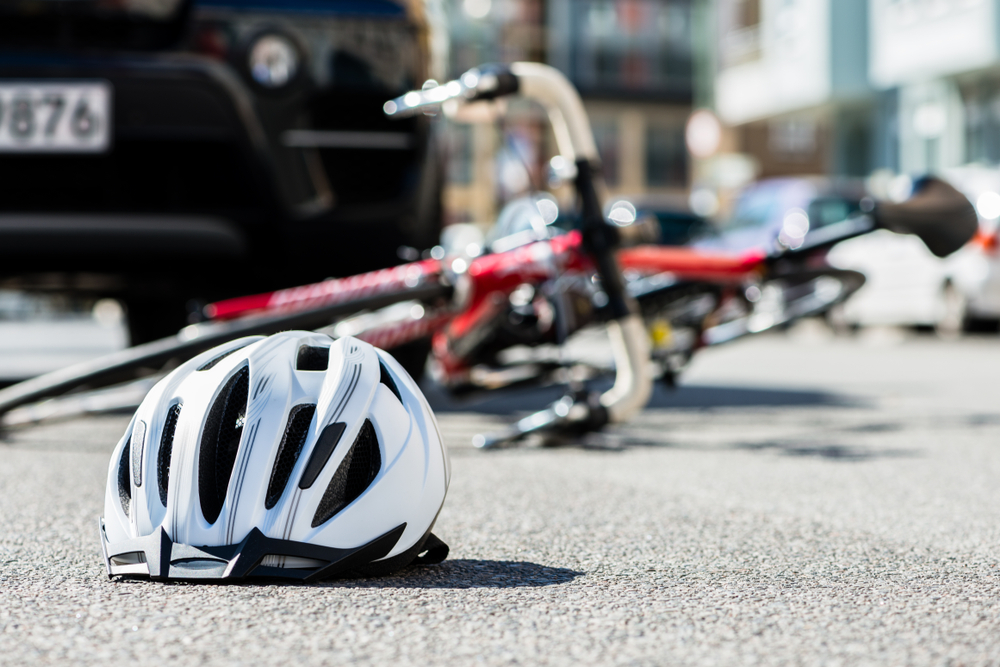
Texas Transportation Code Section 545.157 requires drivers to pass bicycles at a safe distance (not less than three feet) and only when safe to do so. Drivers must slow down if they cannot pass with adequate clearance. When roads are too narrow to pass safely, drivers must wait until conditions allow safe passing.
Sideswipe crashes cause cyclists to lose control and crash. Even when the vehicle doesn’t directly strike the cyclist, the rush of air or the fear of impact may cause the rider to swerve and crash. When this happens because a driver passed too closely, the driver remains liable even though they didn’t make physical contact.
Intersection Bicycle Accidents Beyond Turns
Intersections create collision risks beyond right-hooks and left-crosses, with multiple dangerous scenarios putting cyclists at risk.
Several intersection collision patterns cause serious cyclist injuries:
- Red light and stop sign violations where drivers run traffic controls and strike cyclists proceeding legally through the intersection
- Right turns on red where drivers fail to check for cyclists crossing with the pedestrian signal
- Multi-vehicle crashes that trap cyclists in the collision zone when cars collide at intersections
Proving fault in intersection crashes requires reconstructing the collision using traffic signals, witness accounts, surveillance video, and physical evidence showing vehicle and bicycle paths. Your attorney determines whether the cyclist or driver had the right of way and whether either party violated traffic laws.
Road Defect Bicycle Accidents
Road defects, including potholes, cracked pavement, uneven surfaces, missing manhole covers, drainage grates, debris, and construction hazards, cause bicycle crashes. Cyclists have less stability than cars and cannot safely avoid hazards that cars easily roll over.
Texas law allows injury claims against municipalities and state agencies when road defects cause crashes, but these claims carry special requirements and shorter deadlines.
First, you must prove the governmental entity had actual or constructive notice of the defect, meaning they knew about it or should have known through reasonable inspection and maintenance. Second, you must show the defect caused your crash and injuries. Third, you must file written notice of your claim within six months of the injury.
Your attorney investigates when the defect first appeared, whether the city received prior complaints about it, whether inspection schedules should have caught it, and how long it existed before your crash. Photographs of the defect, measurements of pothole depth or crack width, and testimony from other cyclists who encountered the same hazard all strengthen the claim.
Factors That Increase Bicycle Accident Severity
While driver negligence causes most bicycle crashes, certain factors affect injury severity and legal outcomes.
Speeding and Impairment
Driver speed dramatically increases collision severity. A cyclist struck by a vehicle traveling 20 mph suffers different injuries than one hit at 45 mph. Texas law prohibits driving while intoxicated and sets speed limits based on road conditions.
When drivers exceed speed limits or drive while impaired and strike cyclists, they face criminal charges and clear civil liability. Evidence of speeding or DUI strengthens your compensation claim and may support exemplary damages.
Helmet Use and Texas Law
Texas law does not require adult cyclists to wear helmets, though many cities require helmets for riders under 18. Still, insurance companies sometimes argue that cyclists who weren’t wearing helmets contributed to their own injuries.
Helmet nonuse generally cannot be used as evidence of contributory negligence. This means, even if you weren’t wearing a helmet, you may still recover compensation if driver negligence caused the crash.
Lighting and Visibility Requirements
Texas law requires bicycles operating at night to have a white front light visible from at least 500 feet and a red rear reflector or light visible from 300 feet. Cyclists without proper lighting may face comparative fault arguments from defendants claiming they couldn’t see the bicycle. However, lighting violations don’t excuse drivers from exercising reasonable care and watching for cyclists.
FAQ About Common Bicycle Accident Types in Texas
Note the vehicle’s description and license plate if possible, get witness contact information, look for surveillance cameras, call 911 immediately, and contact an attorney to explore claims through police investigation or your uninsured motorist coverage.
You prove fault through police reports documenting traffic violations, witness statements, traffic camera or dashcam footage, photographs of the crash scene and damage, and expert testimony explaining how the driver’s actions caused the collision.
Most bicycle accident cases settle through negotiation with insurance companies without going to trial, but your attorney prepares every case as if it will go to court to pressure insurers into offering fair compensation. If the insurance company refuses a fair settlement, your attorney takes the case to trial to present your claim to a jury.
Yes, Texas law gives cyclists the right to use most public roads even when bike lanes aren’t available, and drivers must share the road safely regardless of whether you were in a bike lane. You may still recover full compensation if the driver’s negligence caused the crash, though insurance companies might argue comparative fault.
“I didn’t see them” is not a legal defense in Texas. Drivers have a duty to watch for all road users, including cyclists, and failure to see a cyclist typically proves the driver wasn’t paying adequate attention.
No, initial settlement offers from insurance companies almost always fall far below the value of your claim because they’re made before you know the full extent of your injuries, future medical needs, or long-term impact on your life. Consult an attorney before accepting any settlement to evaluate whether the offer fairly compensates your losses.
Let Ryan Orsatti Law Fight for Your Recovery After a Bicycle Accident

If you’ve been injured in a bicycle accident in San Antonio, Austin, Dallas, or Houston, Attorney Ryan Orsatti is here to assist with your bike injury claim. He works directly with injured cyclists to investigate crashes, gather evidence, counter comparative fault arguments, and fight for fair compensation.
Contact Ryan Orsatti Law at (210) 525-1200 for a free case evaluation with a trusted bicycle accident lawyer. Calls are answered 24/7 because evidence preservation can’t wait, and neither should your path to recovery.
Hurt in an accident in San Antonio? Learn how a San Antonio bicycle accident lawyer can help with your claim. Call 210-525-1200 or request a free consultation.
The firm works on a contingency fee. You pay nothing unless the firm recovers money for you, and that covers case expenses as well as the fee: if there is no recovery, you owe no attorney's fee and no case expenses. Ask for the fee agreement and read the fee and expense section before you sign anything.
Related San Antonio legal resources
Primary legal and public-data sources
- TxDOT: Texas crash reports, data, and statistics
- Texas Civil Practice and Remedies Code Chapter 33: proportionate responsibility
Ryan Orsatti Law
4634 De Zavala Road, San Antonio, TX 78249
General reference links. Consult each source for its current text.