
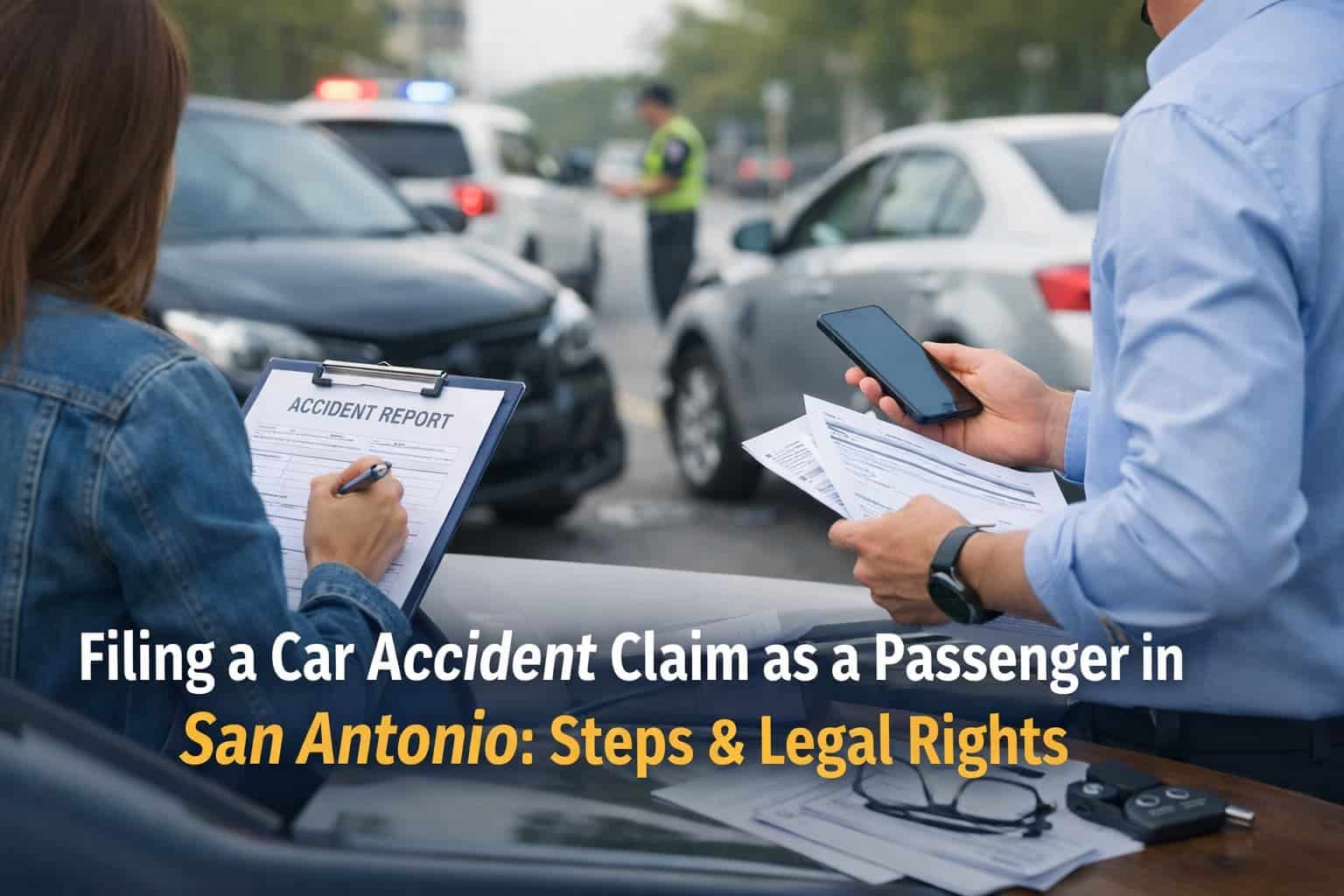
While your status as a passenger can give you strong legal standing, it also creates complications. Multiple insurance policies may apply, each insurer may attempt to shift responsibility to others, and you may need to navigate claims against drivers you know personally, like friends, family members, or romantic partners.
Determining which insurance policy to file against depends on who caused the accident and what coverage is available. Passengers often have multiple options for recovering compensation.
When another driver caused the accident, their bodily injury liability coverage should compensate you for injuries. This is typically the primary source of compensation for passengers injured by drivers other than the one they rode with. You file a third-party claim directly with the at-fault driver’s insurance company, providing documentation of your injuries, treatment, and damages.
Texas minimum liability coverage is $30,000 per person and $60,000 per accident for bodily injury (and $25,000 for property damage), though some drivers carry higher limits. When accidents involve multiple injured people, the at-fault driver’s policy limits are divided among all claimants. This can leave you with insufficient compensation if the policy limits are low and injuries are severe.
If the driver of the vehicle you were in caused or contributed to the accident, you can file a claim against their insurance. Many passengers hesitate to file against friends or family members, worrying about damaging relationships or causing financial harm.
Liability insurance exists to protect drivers from financial responsibility when they cause accidents. In most cases, you’re seeking payment from the liability insurer, but if damages exceed policy limits or coverage is denied, the driver could still face personal exposure. Their premiums may increase, but that’s a consequence of causing an accident, not of your legitimate claim for compensation.
If the driver you rode with caused or contributed to the crash, not pursuing that claim may significantly limit what you can recover, especially if the other driver’s coverage is low or liability is disputed. Insurance exists for these situations, and filing a claim is exercising your legal rights, not betraying a relationship.
When both drivers involved in the accident share fault, passengers may file claims against both drivers’ insurance policies. Fault percentages usually determine each driver’s share of liability, but Texas law can make a defendant who is found more than 50% responsible jointly and severally liable for the damages recoverable by the claimant (so collection strategy can matter).
Insurance companies in multiple-fault situations frequently dispute liability percentages to minimize what they pay. They may spend months arguing among themselves while your medical bills accumulate.
An attorney can file claims against all responsible parties simultaneously and negotiate with multiple insurers to access greater compensation without waiting for insurers to resolve their disputes.
When at-fault drivers lack insurance or carry insufficient coverage to compensate for your injuries, uninsured motorist (UM) and underinsured motorist (UIM) coverage provides additional compensation. This coverage may be available through the driver you rode with if their policy includes UM/UIM protection, or through your own household insurance policy if you’re listed as a household member.
UM coverage applies when at-fault drivers have no insurance. UIM coverage applies when at-fault drivers carry liability insurance, but the limits are too low to fairly compensate for your injuries. Texas insurers generally must offer UM/UIM coverage, and it’s included unless the insured rejects it in writing, so availability depends on the specific policy.
Accessing UM/UIM coverage is policy-driven: you must give notice and cooperate with the insurer’s investigation, and disputes are resolved through the process required by the policy , often negotiation and, if necessary, litigation or arbitration if the policy provides for it.
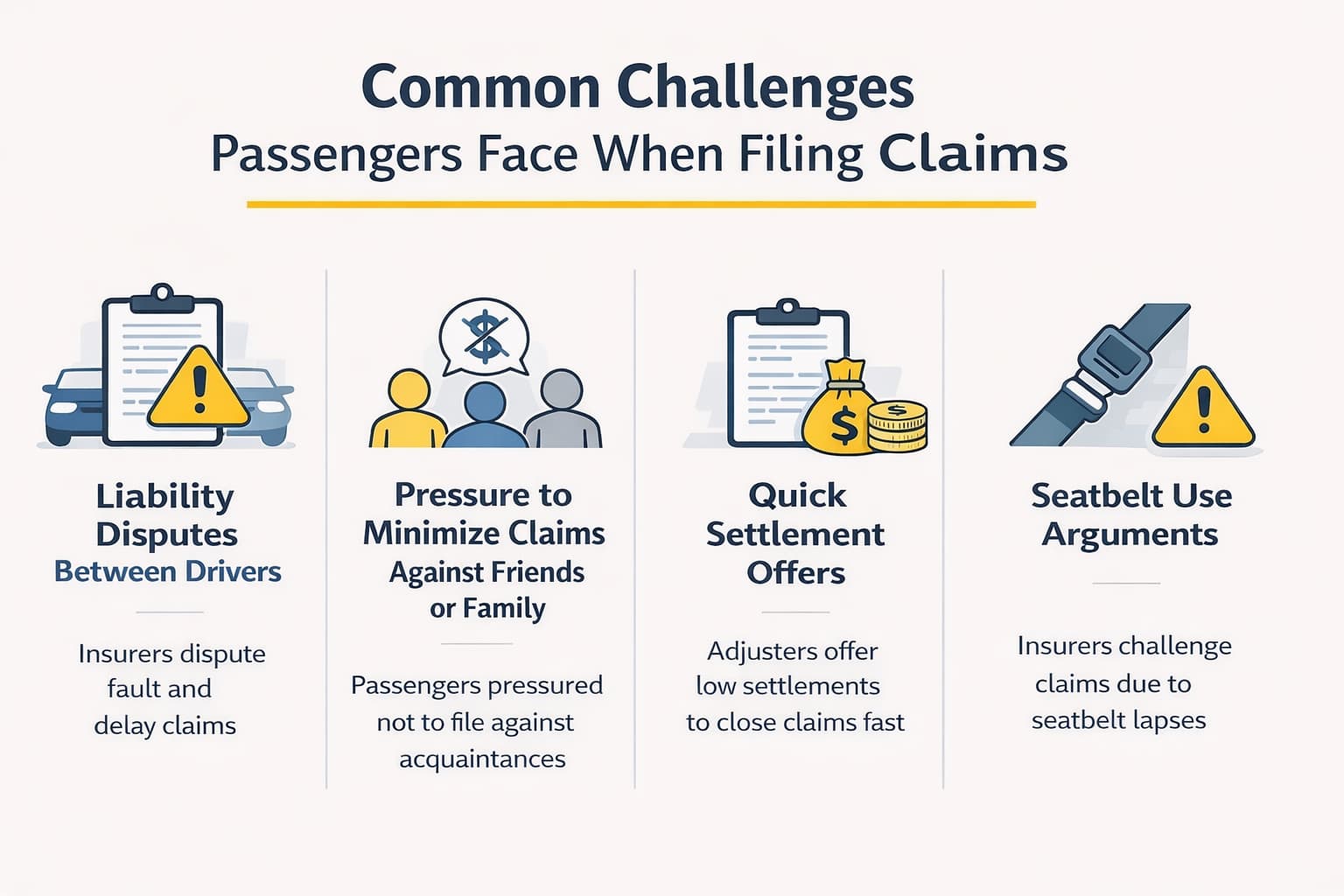
Passengers encounter specific obstacles when pursuing injury claims, and insurance companies exploit these challenges to reduce what they pay.
When fault isn’t clear or multiple drivers contributed to the accident, insurance companies dispute liability percentages among themselves. They may delay your claim while investigating, arguing about fault allocation, and attempting to shift maximum responsibility to other insurers. These disputes can take time while your medical bills accumulate and financial pressure mounts.
Insurance companies know passengers feel uncomfortable filing claims against people they know. Adjusters may suggest you should pay your own medical bills to avoid causing problems for friends or family members. This pressure is inappropriate and ignores the purpose of liability insurance.
Insurance adjusters contact injured passengers quickly, often within days of the accident, offering settlements. These offers typically cover immediate medical bills and minor vehicle damage but ignore ongoing treatment needs, lost earning capacity, and non-economic damages. Accepting early settlements before reaching maximum medical improvement leaves you responsible for future treatment costs that may far exceed the settlement amount.
Texas law generally requires seatbelt use, and insurance companies sometimes argue that passengers who weren’t wearing seatbelts contributed to their own injuries. While failure to wear a seatbelt may affect damages in some cases, it doesn’t eliminate your right to compensation. An attorney can counter these arguments with medical evidence showing your injuries would have occurred regardless of seatbelt use.
Some insurance policies include medical payments coverage (MedPay) that pays medical bills regardless of fault. Using MedPay provides immediate payment for treatment, but the insurance company may have reimbursement or subrogation rights. Understanding which coverage pays first and how subrogation affects your net recovery requires careful analysis of policy language and Texas insurance law.

Passengers injured in car accidents may recover fair compensation for injuries they didn’t cause. When insurance companies dispute liability, pressure you, or offer inadequate settlements, experienced legal representation protects your rights.
We answer calls 24/7, and consultations are always free. We work on a contingency-fee basis, so you pay no attorney’s fees unless we win your case. Contact a San Antonio personal injury lawyer at Ryan Orsatti Law to discuss your passenger injury claim and how we can help you access full compensation from all available insurance sources.