
Nearly half of all fatal two-vehicle motorcycle crashes share the same cause: a driver turning left in the path of a motorcyclist traveling straight, according to federal traffic data. The rider has the right of way. The driver fails to yield. And the motorcyclist pays the price.
This pattern repeats thousands of times each year because drivers often fail to look for bikes, or see them but proceed anyway. Motorcycle right of way laws contradict the assumptions many people make after a crash: that the motorcycle rider was speeding, violating traffic laws, or acting like a daredevil.
But the reality is that motorcycles have exactly the same right of way privileges as cars and trucks. When a driver violates that right of way, the driver is at fault, not the motorcycle rider. If you’ve been injured in a crash caused by another driver’s failure to yield, a motorcycle accident lawyer can help you fight back against unfair bias and blame.
Traffic laws treat motorcycles as vehicles with full legal standing. The standard right of way rules governing cars and trucks apply equally to motorcycles at every intersection, highway merge, and traffic signal.
Vehicles yield to whichever driver arrived first. When two arrive simultaneously, the driver on the left yields to the driver on the right. A motorcycle waiting at a four-way stop has the same priority as an SUV in the same position.
Left-turning vehicles must yield to oncoming traffic traveling straight through a green light, whether that traffic consists of sedans, trucks, or motorcycles.
Texas Transportation Code governs vehicle operation and right of way, applying equally to motorcycles and other motor vehicles. Section 545.152 specifically requires drivers turning left to yield to approaching vehicles close enough to constitute an immediate hazard.
The legal principle is simple: a motorcycle traveling legally through an intersection has priority over a car attempting to turn left across its path.
When a car turns left across an oncoming motorcycle’s path, the impact typically strikes from the front or side. The rider has no steel frame, no airbags, and no crumple zones absorbing the collision force.
National Highway Traffic Safety Administration data reveals that 42% to 46% of fatal two-vehicle motorcycle crashes involved another vehicle turning left while the motorcyclist traveled straight. This single crash type kills more motorcyclists than any other multi-vehicle scenario.
Why do drivers keep making this deadly mistake? Several factors work against motorcyclists at intersections:
Researchers call this phenomenon “inattentional blindness.” It explains why so many drivers involved in these crashes honestly report they never saw the motorcycle that was there the entire time.
When a driver violates a motorcyclist’s right of way and causes a collision, that driver usually bears legal responsibility. The violation itself serves as evidence of negligence.
Proving a negligence claim involves four elements:
Texas follows a modified comparative negligence system under Texas Civil Practice and Remedies Code Section 33.001. Injured motorcyclists may recover compensation even if they share some fault, as long as their responsibility doesn’t exceed 50%. Any award gets reduced by the rider’s percentage of fault.
Adjusters often exploit comparative fault rules by searching for ways to blame the motorcyclist. Common tactics include questioning whether the rider was speeding, wearing appropriate gear, or positioned correctly in the lane. These arguments reduce settlement values even when the other driver clearly violated the motorcycle’s right of way.
An experienced motorcycle accident lawyer can counter these tactics with strong evidence. Witness statements, traffic camera footage, police reports documenting the violation, and accident reconstruction analysis can demonstrate that the driver, not the rider, caused the crash.
If you’ve been hit by a driver who violated your right of way, the actions you take in the following days and weeks affect your ability to recover compensation. Assuming you’ve already received emergency medical care, these steps help preserve your legal options:
The statute of limitations for personal injury claims varies by state. Texas generally allows two years from the date of the accident under Texas Civil Practice and Remedies Code Section 16.003, but waiting too long can make evidence harder to obtain and witnesses harder to locate.
Even when you have the right of way, defensive positioning can help you avoid being hit by a negligent driver.
These precautions can’t prevent every crash, but they can give you a better chance of avoiding drivers who fail to look twice for motorcycles.
Yes. Every state treats motorcycles as motor vehicles entitled to full use of traffic lanes. Motorcycles must obey all traffic signals, speed limits, and right of way rules that apply to cars and trucks. The only motorcycle-specific laws typically involve helmet requirements, lane positioning, and passenger restrictions, not right of way.
The left-turning driver is typically at fault. Drivers making left turns must yield to oncoming traffic, including motorcycles. When a driver turns left and strikes an oncoming motorcycle traveling legally through the intersection, that driver has generally violated the motorcyclist’s right of way and may be liable for resulting injuries.
Partial fault doesn’t necessarily bar recovery. Texas and most other states use comparative negligence systems that allow injured parties to recover compensation even when they share some responsibility. Your compensation gets reduced by your percentage of fault. An attorney can help challenge unfair fault allocations and present evidence supporting your version of events.
Several types of evidence can establish a right of way violation:
The strongest claims combine multiple evidence types to create a clear picture of what happened.
Insurance companies have teams of adjusters working to minimize your claim after a motorcycle crash. They know how to exploit bias against riders, dispute right of way violations, and shift blame onto injured motorcyclists. Without legal representation, these tactics can unfairly undermine your claim.
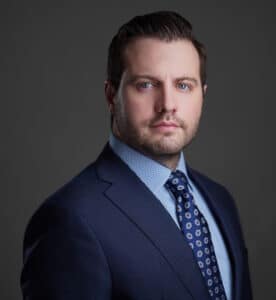
Attorney Ryan Orsatti represents injured riders throughout San Antonio and Texas, handling everything from intersection collisions to left-turn crashes caused by drivers who failed to yield. If another driver’s negligence put you in this position, you have the right to pursue compensation for medical bills, lost income, and the pain this crash has caused. Call us today for a free consultation, or contact us online to discuss your case.