
Quick Answer
After a car wreck in Texas, you should talk to a lawyer before posting photos, videos, comments, updates, jokes, apologies, or “I’m okay” messages online. Even innocent posts can be misunderstood by an insurance adjuster, defense lawyer, or jury.
Social media can affect three key parts of a Texas injury claim: fault, injury severity, and credibility. In Texas, a person may be barred from recovering damages if their percentage of responsibility is greater than 50%, and recoverable damages may be reduced by their percentage of responsibility if they are not barred. (Texas Statutes)
A lawyer can help you protect useful evidence without accidentally creating new problems. The goal is not to “hide” anything. The goal is to avoid incomplete, emotional, or out-of-context posts that can be used against you later.
Why Social Media Matters After a Texas Car Wreck
After a crash on I-10, Loop 1604, I-35, Loop 410, or any busy San Antonio road, it is natural to want to update family and friends. You may want to post a photo of the damage, warn others about traffic, thank people for checking on you, or say you are “fine” because you do not want anyone to worry.
The problem is that insurance companies and defense lawyers often look for anything that can be used to minimize a claim. A single post rarely tells the full story. But once it exists, it may become part of the claim conversation.
Texas discovery rules generally allow parties to seek non-privileged information relevant to the subject matter of a lawsuit, and discovery can include documents, photographs, electronic recordings, data, and data compilations. Texas Rule of Evidence 801 also recognizes that certain opposing-party statements are not hearsay, which means a party’s own statements may sometimes be used against that party in court if the rule’s requirements are met.
That is why calling a lawyer before posting can protect your case.
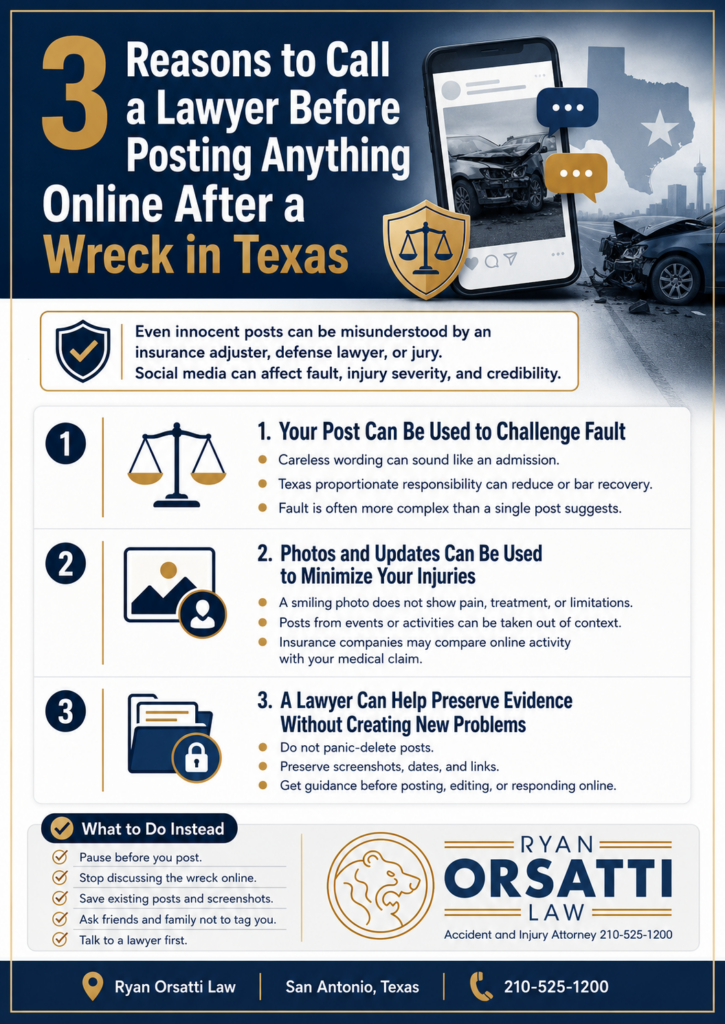
Reason 1: Your Post Can Be Used to Challenge Fault
In many wreck cases, the insurance company’s first move is to look for a way to shift blame. A post can give them material to do that.
Examples include:
- “I didn’t even see the other car.”
- “I was running late.”
- “This intersection is always confusing.”
- “I slammed my brakes at the last second.”
- “I should have left earlier.”
You may mean one thing. The adjuster may argue something else.
How Texas Proportionate Responsibility Changes the Stakes
Texas uses a proportionate responsibility system. If the injured person is found more than 50% responsible, they may not recover damages. If they are not barred, their recovery can be reduced by their percentage of responsibility. (Texas Statutes)
That makes careless online wording important. A casual post that sounds like an admission can become part of a fault dispute.
What to Do Instead
Before posting about how the wreck happened, speak with a lawyer. Fault is often more complicated than it looks at the scene. A proper investigation may include:
- Crash report review
- Witness statements
- Scene photographs
- Vehicle damage analysis
- Dashcam or surveillance footage
- Cell phone and distraction issues
- Road design, weather, lighting, and traffic-control evidence
A short social media post usually cannot capture all of that.
Reason 2: Photos and Updates Can Be Used to Minimize Your Injuries
Insurance companies often compare what you claim medically with what you appear to be doing online. That does not mean injured people must stay silent forever or stop living their lives. It does mean online posts can be misread.
For example, a photo of you smiling at dinner does not show the pain medication you took beforehand, the limited time you stayed, or the pain flare-up afterward. A post from a family event does not show your physical restrictions the next morning. A gym check-in may not show that you only walked on a treadmill for ten minutes under doctor guidance.
Common Posts That Can Create Problems
| Online Post | How an Insurance Company May Try to Use It | Safer Approach |
|---|---|---|
| “I’m okay” or “I’m fine” | Argue you were not seriously hurt | Let family know privately that you are getting checked and recovering |
| Vehicle damage photos | Dispute crash severity or force of impact | Save the photos; share them with your lawyer first |
| Vacation, dinner, or event photos | Suggest your life was not disrupted | Avoid posting injury-related context online |
| Workout or activity posts | Argue you are not limited physically | Follow medical advice and discuss posting with counsel |
| Comments blaming yourself | Shift responsibility to you | Do not discuss fault online |
| Medical updates | Question diagnosis, treatment gaps, or symptoms | Keep medical details between you, your providers, and your legal team |
Reason 3: A Lawyer Can Help Preserve Evidence Without Creating Spoliation Problems
One of the biggest mistakes after a wreck is deleting posts in a panic. Do not assume deleting, editing, hiding, or changing posts will solve the issue. It can create a separate problem if the content is relevant to the crash, injuries, medical treatment, activities, lost wages, or damages.
A lawyer can help you handle existing posts correctly. The right approach may include preserving screenshots, saving links, documenting dates, changing future posting habits, and avoiding new statements about the wreck.
Do Not Delete First and Ask Questions Later
A practical rule: pause before you post, delete, edit, or respond.
This applies to:
- Facebook posts
- Instagram photos and stories
- TikTok videos
- Snapchat content
- X posts
- LinkedIn updates
- YouTube videos
- Reddit comments
- Google reviews
- Group texts that may later be screenshotted
- Comments by friends and family tagging you
A lawyer can help separate harmless content from content that may need to be preserved or handled carefully.
What If My Account Is Private?
A private account is not the same as invisible. Privacy settings may limit what the public can see, but they do not necessarily prevent discovery in a lawsuit. Texas discovery rules can reach relevant non-privileged information, including electronic information and photographs, depending on the facts and court rulings.
That does not mean the defense automatically gets unlimited access to your entire life. It does mean you should not rely on privacy settings as your only protection.
What If I Already Posted After the Wreck?
Do not panic. Also, do not start deleting.
Use this checklist:
- Stop posting about the wreck, injuries, insurance claim, vehicle damage, treatment, or legal issues.
- Do not argue with the other driver, witnesses, or commenters online.
- Save screenshots of existing posts, comments, photos, videos, and timestamps.
- Write down which platforms you used and what you posted.
- Tell your lawyer what exists, even if you think it looks bad.
- Do not give the insurance company an explanation about the post until you have legal guidance.
- Ask friends and family not to tag you or post about your injuries or activities.
The earlier you get advice, the easier it is to prevent a small issue from becoming a major claim dispute.
Attorney Insight: The Problem Is Usually Context
Most harmful social media issues are not caused by people lying. They are caused by incomplete context.
A client may post a smiling photo because they are trying to stay positive. An adjuster may frame it as proof they are not in pain. A client may say “I’m fine” to calm a parent. An adjuster may frame it as a statement that no injury occurred. A client may post a damaged bumper. An adjuster may argue the crash was too minor to cause injury.
The legal issue is not just what you meant. It is how the other side may use it.
What Should I Avoid Posting After a Wreck?
Until your claim is resolved, avoid posting about:
- How the crash happened
- Who was at fault
- Your injuries or pain level
- Doctor visits or diagnoses
- Medications
- Therapy progress
- Missed work or return to work
- Vehicle damage
- Settlement discussions
- Insurance adjusters
- Lawsuits, lawyers, or legal strategy
- Activities that could be taken out of context
You should also avoid jokes, memes, sarcasm, or angry comments about the crash. Humor and frustration often read differently when copied into an insurance file.
Can Friends and Family Hurt My Case With Their Posts?
Yes. Friends and family can unintentionally create problems by tagging you, posting photos of you, discussing your injuries, or commenting about what happened.
A simple post like “So glad Ryan is okay after that crash” may be used to argue you were not seriously hurt. A photo from a family event may be used without context. A comment blaming the other driver may create witness issues.
Ask people close to you not to post about:
- The wreck
- Your injuries
- Your recovery
- Your activities
- Your claim
- The other driver
- Insurance or settlement discussions
How a Lawyer Helps Before You Post
A Texas personal injury lawyer can help you make practical decisions, including:
- What not to post while the claim is pending
- Whether existing posts should be preserved
- How to respond if an adjuster asks about social media
- Whether friends or family should remove tags going forward
- How to document injuries without creating public posts
- How to protect helpful evidence like scene photos and dashcam footage
- How to avoid statements that may affect fault, damages, or credibility
The purpose is not to make your life secret. The purpose is to keep your claim focused on reliable evidence: medical records, crash facts, witness testimony, bills, wage loss, and the actual impact of the wreck.
FAQs About Posting Online After a Car Accident in Texas
Can insurance companies look at my social media after a wreck?
Yes. Insurance companies may review publicly available social media. If a lawsuit is filed, relevant non-privileged social media content may also become part of discovery depending on the facts.
Is it okay to post pictures of my damaged car?
It is safer to save the photos and show them to your lawyer first. Vehicle photos can be helpful evidence, but public posts may invite comments or arguments that create unnecessary issues.
Should I delete posts I already made?
Do not delete, edit, or hide posts related to the wreck without legal advice. Preservation matters. Call a lawyer and explain what was posted.
Can a private Instagram or Facebook account still matter?
Yes. A private setting may reduce public visibility, but it does not automatically protect relevant posts from discovery in litigation.
Can I tell people I am okay?
You can reassure loved ones privately, but avoid public “I’m fine” or “I’m okay” posts after a crash. Those words can be used out of context.
What if the other driver posted about the crash?
Save screenshots if you can do so lawfully and safely. Do not argue with the other driver online. Give the information to your lawyer.
Should I stop using social media completely?
Not always. But you should avoid posting about the wreck, injuries, treatment, activities, or claim until you receive legal guidance.
Talk to a San Antonio Car Accident Lawyer Before Posting
If you were injured in a wreck in San Antonio or anywhere in Texas, get legal advice before posting online about the crash. A short call can help you avoid mistakes that affect fault, injury proof, or credibility.
Ryan Orsatti Law
4634 De Zavala Rd, San Antonio, TX 78249
Phone: 210-525-1200
This blog is for informational purposes only, not legal advice. Reading it does not create an attorney-client relationship. Past results do not guarantee future results.
Hurt in an accident in San Antonio? Learn how a San Antonio personal injury lawyer can help with your claim. Call 210-525-1200 or request a free consultation.
The firm works on a contingency fee. You pay nothing unless the firm recovers money for you, and that covers case expenses as well as the fee: if there is no recovery, you owe no attorney's fee and no case expenses. Ask for the fee agreement and read the fee and expense section before you sign anything.
Related San Antonio legal resources
Primary legal and public-data sources
- Texas Civil Practice and Remedies Code Chapter 16: limitations
- Texas Civil Practice and Remedies Code Chapter 33: proportionate responsibility
Ryan Orsatti Law
4634 De Zavala Road, San Antonio, TX 78249
General reference links. Consult each source for its current text.